Textile Education · Furniture Styling
How to Layer Sofa Textiles: Scale, Drape, and Fiber
A throw on a sofa is a small domestic decision with a surprisingly large effect. Its proportions can settle a room or make it feel busier; its weave can catch the light, soften a hard edge, or invite a hand to linger. The best layer is not necessarily the softest or the most luxurious. It is the one whose size, behavior, and care requirements make sense in the life of the room.
Published November 13, 2026
A sofa rarely arrives alone in a room. It is accompanied, sooner or later, by books, cups, cushions, remote controls, a pet with an opinion about upholstery, and at least one blanket that has migrated from somewhere else. A throw can make this accumulation look deliberate. It can also become one more thing to straighten before guests arrive. The difference often lies less in color than in scale, drape, and fiber: three practical qualities that determine how a textile sits, moves, and wears.
There is no single correct way to arrange sofa textiles. A precisely folded rectangle may suit a formal room; a casual sweep over the arm may suit one where people actually sit. Neither is inherently more tasteful. What matters is the relationship between the textile and the furniture, and between the furniture and the habits of the household. A layer that looks composed but slips to the floor whenever someone stands is making a quiet argument against itself.
Thinking in terms of textile behavior offers a useful alternative to styling rules that prescribe a fixed number of cushions or a particular fold. Dimensions describe how much fabric is available. Weave and weight influence how that fabric falls. Fiber affects its warmth, softness, and maintenance. Together, these details help explain why one throw appears tailored on a sofa while another looks as though it has been there for years—in the best possible sense.
Begin with the sofa, not the throw
Before choosing a placement, consider the sofa’s shape. A low, deep sofa can absorb a generous textile without being overwhelmed; a narrow settee may be visually crowded by a wide, heavy blanket. Rounded arms, exposed wooden frames, chaise extensions, and sharply defined cushions each create different places for fabric to catch or fall. The sofa is not merely a background. It is part of the textile’s support system.
Measure the area you want to cover rather than relying on the vague impression that a throw is “large enough.” For an arm drape, note the height from the top of the arm to the seat and how far down the front you would like the fabric to reach. For a seat or back layer, consider the width of the cushions and whether the textile should cover one seat, several seats, or only a central section. If the throw is meant to be used as well as seen, allow enough length to wrap around a person without pulling it completely off the sofa.
A compact throw can provide a deliberate accent: folded over one arm, placed across the back of a chair, or laid at the center of a broad seat. Its limited coverage keeps the sofa’s upholstery visible and gives a patterned or textured textile a clear role. A larger throw offers a different effect. It can cross the seat and fall over the front, or travel from the back cushions to the floor in an easy, continuous line. That fuller drape may feel relaxed, but it can also obscure the sofa’s shape or collect underfoot.
These are not strict categories. A blanket measuring roughly 50 by 70 inches may work as a compact accent on a large sectional and as a more substantial covering on a smaller sofa. The proportions of the furniture matter as much as the dimensions printed on a label. When a textile is unusually stretchy, open-knit, or designed with a rippled construction, its apparent size can change with how it is handled. Leave room for that behavior rather than expecting an exact geometric rectangle every time.
Let the drape do some of the work
Drape is the way fabric hangs under its own weight. In a room, it determines whether a throw makes a crisp plane, a soft curve, or a collection of folds. A fluid textile follows the contours of an arm or cushion. A firm one holds a more defined edge. Neither quality is superior; each produces a different relationship with the sofa.
To test a throw, hold one edge at the height of the sofa arm and let the rest fall. Notice whether the fabric drops in a continuous line, bunches into rounded folds, or resists bending. Then try it across a seat cushion. A flexible textile may settle into the space between cushions, while a stiffer woven cloth can bridge the gap. This little experiment is more informative than a description such as “soft” or “cozy,” words that say something about sensation but relatively little about how a material will behave when draped.
Weight matters, though not in isolation. A light, airy fabric can make a fine, relaxed layer, but may shift when someone sits down. A heavier textile is more likely to stay put and produce a pronounced fall, though it can make a small sofa look burdened. Surface texture affects the impression, too: a brushed or plush finish can appear visually substantial even when the throw itself is not especially heavy. The goal is not to find a fabric that never moves. It is to understand whether its movement will suit the way the sofa is used.
There is also the question of arrangement. A narrow fold across the back can frame the sofa without covering much upholstery. A throw laid diagonally over a seat creates a looser, more informal line, but may need regular adjustment. A single arm drape can bring asymmetry to a symmetrical room. For a more contained look, fold the textile into thirds lengthwise before placing it over the arm; for a softer effect, let one edge remain uneven. A tidy arrangement is only useful if it can survive a normal afternoon.
Try not to treat every fold as a mistake. Fabric is not a poster, and a sofa is not a display plinth. A little irregularity signals that the textile has been used. If the throw is repeatedly pulled into a precise arrangement, it may be occupying the wrong place—or serving a decorative purpose that conflicts with its practical one.
Read the weave as well as the color
Two throws in the same color can have very different presences. A smooth, tightly woven surface tends to make a quiet, even plane; a chunky knit or raised pattern introduces shadow and depth. Herringbone, plaid, waffle, chenille, and matelassé each produce their own visual rhythm. These patterns are not merely decoration. The construction of a textile influences its thickness, elasticity, and ability to hold a fold.
A dense weave often looks orderly because its surface is relatively continuous. It can work well in a room that already contains busy upholstery, patterned cushions, or detailed woodwork. An open weave reveals more of what lies beneath and can feel lighter in a crowded composition. A textured knit brings a different kind of emphasis: its loops and ridges are visible from across the room, and can make a solid color feel more animated. When several textures share the sofa, vary their scale. A fine rib beside a broad plaid, for instance, is easier to read than two similarly sized patterns competing at equal volume.
Fringe and finished edges contribute to the effect. Fringe adds movement at the boundary of a throw and can soften a straight sofa arm, though it may become tangled or catch on nearby objects. A bound or stitched edge gives the textile a more contained outline. On a small sofa, an elaborate border can take up much of the visual attention; on a larger piece, the same detail may help define the throw’s shape.
Think of the room as a conversation among surfaces, not as a contest in which each object must make a statement. If the sofa upholstery has a strong pattern, a plain throw with an interesting weave can add dimension without adding another motif. If the upholstery is quiet, a plaid or herringbone textile can establish a focal point. Color is still important, but texture is often what makes a room feel layered rather than merely coordinated.
Choose fiber with use in mind
Fiber is the material from which the yarn is made; weave or knit describes how that yarn is assembled. Those two facts help predict how a throw may feel and what it will ask of its owner. A textile can look appropriate in a room while requiring more care than the household is prepared to give it. That does not make it a poor choice, but it does make the care label part of the decision.
Cashmere: light warmth, considered care
Cashmere is prized for its fine, soft feel and its warmth relative to weight. A cashmere throw can provide an inviting layer without the visual bulk of a thick blanket. Its drape depends on construction: a fine, lightweight cashmere-and-silk fabric will behave differently from a denser woven piece. Cashmere’s delicacy also makes it worth protecting from rough handling, abrasion, and spills. Follow the maker’s care instructions; some pieces are designated for dry cleaning, and washing methods should never be assumed from fiber name alone.
On a sofa, cashmere often suits a restrained placement where its hand and fluidity can be appreciated without leaving it exposed to constant friction. That need not mean keeping it out of reach. It means considering whether the throw will be used for an occasional evening layer, or asked to withstand daily contact from children, pets, and a household that treats the sofa as a place to eat.
Cotton: familiar, breathable, and varied
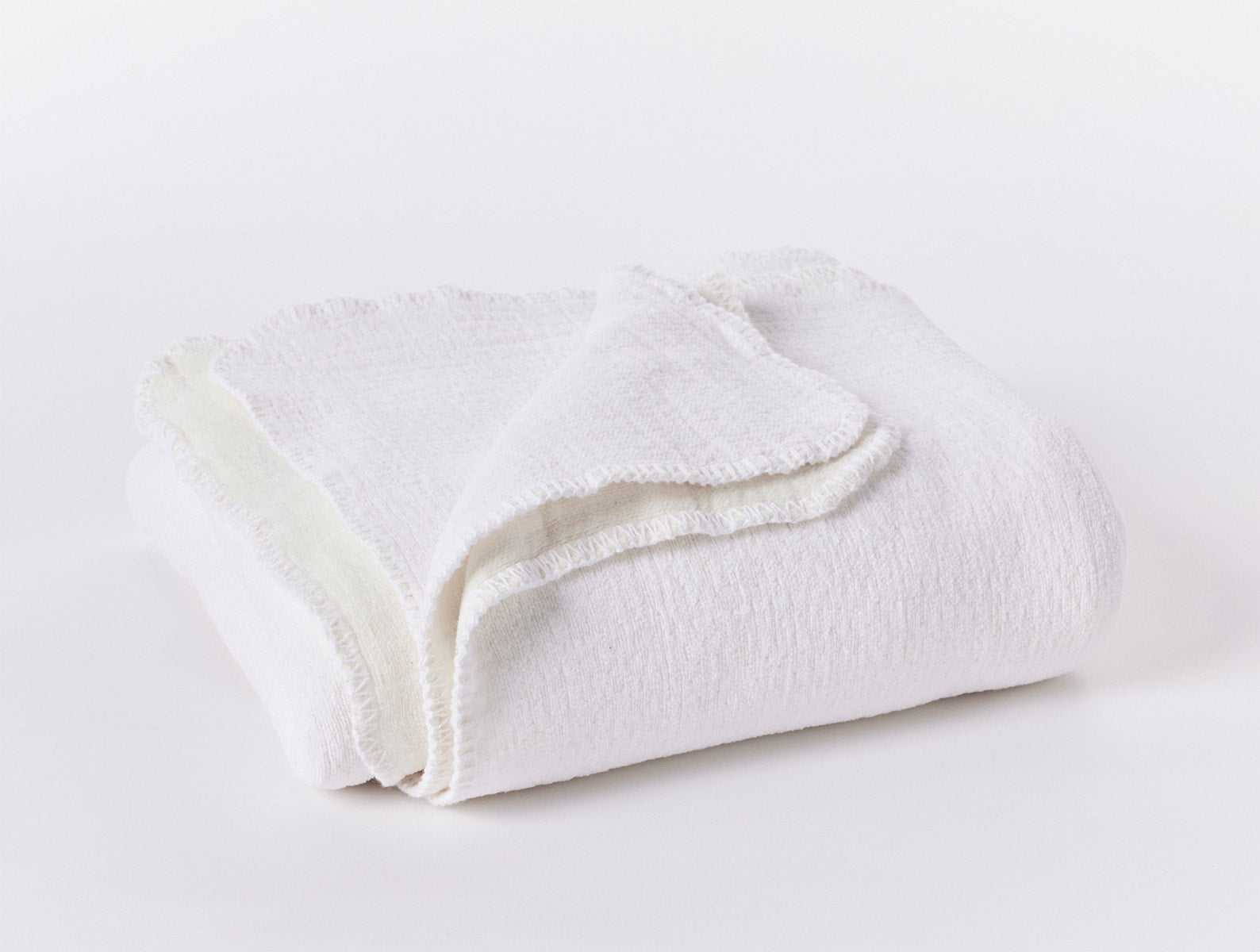
Cotton ranges from crisp and flat to plush and nubby, depending on yarn, finishing, and construction. It is often a practical choice for everyday use, especially when the care instructions allow machine washing. An organic cotton chenille throw, for example, has a soft, raised surface rather than the cool smoothness associated with a plain weave. The Cozy Cotton Organic Throw combines chenille texture with a gently puckered finish and a soft white reverse, details that make it useful for layering while also giving it a distinct surface character.
For a sofa that sees frequent use, ease of laundering can be as important as softness. Cotton may also be a good visual counterweight to wool or cashmere cushions: its texture can be tactile without appearing especially heavy. Check whether a textile is likely to shrink, stretch, or change in texture with washing, and follow the instructions rather than treating all cotton throws as interchangeable.
Wool: warmth, resilience, and texture
Wool is a broad family of fibers, and its feel varies with breed, fineness, yarn preparation, and fabric construction. It can provide substantial warmth and a springy, textured hand. Some wool throws are brushed for softness; others retain a more pronounced, natural surface. Wool can make a sofa layer that feels useful in cooler weather and visually grounding in a room with smooth upholstery.
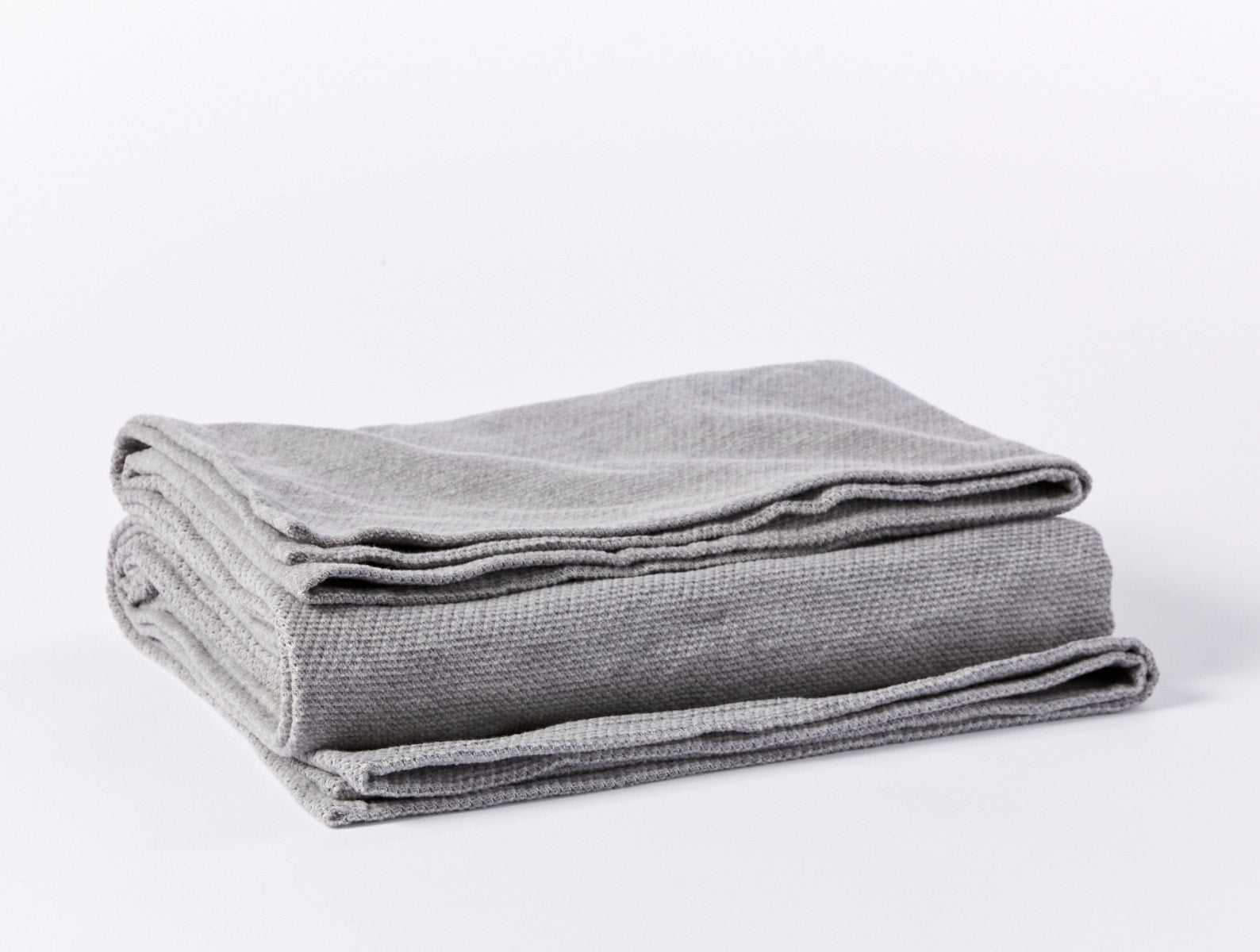
Blends can bring together different qualities. The Sequoia Washable Organic Cotton and Wool Throw, for instance, combines organic cotton with organic wool and has a brushed finish. Its blend offers a way to consider cottony softness alongside wool warmth, while the stated washable care instructions make routine maintenance part of its practical profile. Always verify the instructions for the particular textile; care needs are not determined by fiber content alone.
Alpaca: soft warmth with a distinctive hand
Alpaca is known for a soft feel and insulating warmth, and many alpaca textiles have a fluid, sometimes lustrous surface. Its appearance can be elegant without being formal, especially when the construction is simple. As with wool and cashmere, the finished textile’s weight and weave affect how it will sit on furniture. A lightweight alpaca throw may drape in long folds; a heavier bouclé construction will make a more textured, substantial statement. Care requirements vary, so the label remains the final authority.
When comparing fibers, avoid turning a material name into a promise. “Warm,” “soft,” and “breathable” describe broad tendencies, not guarantees for every textile. Yarn, weave, finish, and density all matter. A close look at construction—and a realistic understanding of how the throw will be used—usually tells more than a list of fiber names alone.
Build a layered look without making a pile
Layering is not the same as accumulating. If the sofa already has cushions in several shapes and fabrics, one well-chosen throw may be enough. If the upholstery is plain and the room feels flat, two layers can help: perhaps a smooth, structured textile beneath a smaller, more tactile one. The key is to give each layer a job. One might provide coverage; another might introduce color or texture.
Begin with the largest textile and place it where it can sit securely. Add a smaller accent only if it adds a contrasting scale, surface, or function. A lightweight throw over a dense one can create a soft visual transition; two similarly sized, similarly textured blankets may instead read as a heap. Leave some upholstery visible. Negative space—the unoccupied area around a cushion or textile—is part of the composition, even in a room that is meant to feel relaxed.
Color can help connect a throw to its surroundings without requiring an exact match. Pick up one restrained note from a rug, artwork, or cushion. Alternatively, use a quiet neutral to give more colorful elements room to breathe. A patterned throw can supply the principal motif, while nearby cushions repeat only one or two of its colors. This produces continuity without making every object appear to have been selected as part of a set.
For a less formal arrangement, fold the throw loosely and place it where someone might naturally reach for it. For a more composed one, fold it with edges aligned and position it against the sofa’s geometry. A hybrid approach is often the most convincing: a controlled placement with enough softness to suggest that the blanket can be used without ceremony.
Care is part of the styling decision
A textile that requires specialist care may still belong on a sofa, but its placement should reflect that reality. A valuable or delicate throw might sit on the back of a sofa used mostly for conversation, rather than on the seat of one where snacks and muddy shoes are regular guests. A machine-washable layer may be better suited to daily contact. The point is not to rank one material above another; it is to match the textile’s maintenance needs to the household’s habits.
Before washing, check the care instructions and inspect the throw for loose fringe, stains, or snags. Use the recommended temperature and cycle, and avoid assuming that a gentle-looking fabric can tolerate a gentle machine cycle. Drying matters, too: heat can affect size and texture, while some fibers benefit from air drying or professional cleaning. Storage between seasons should protect natural fibers from pests and moisture without compressing them for long periods. A clean, dry textile stored in a suitable container is easier to return to the sofa in good condition.
Regular attention can also prevent small problems from becoming permanent. Lift crumbs rather than grinding them into the weave. Blot spills instead of rubbing them outward. Remove pills only with a tool appropriate to the fabric, working carefully so that surface fibers are not cut or pulled. These are unglamorous practices, but they preserve the qualities that made the throw appealing in the first place.
A practical way to make the choice
When deciding among sofa textiles, ask four questions. First, what area should the throw cover? Second, how should it behave when draped—hold a clean line, fall softly, or stay close to the cushion? Third, what texture is missing from the room? And finally, how often will the textile be used, and what care can realistically be given to it?
Answers need not be elaborate. A compact, washable cotton throw may suit a busy family room. A larger wool layer may give a broad sofa a more grounded appearance. A fine cashmere textile may be welcome as a light, intimate layer in a quieter setting. An alpaca weave may introduce softness without the look of a heavy blanket. The right choice is the one that makes sense both at rest and in use.
Once the throw is in place, sit down. Stand up. Reach for it. Notice whether it slides, bunches, catches, or falls in a way that pleases you. The room can be judged from across the doorway, but the textile is judged at closer range: by how it feels on a cool evening, how often it needs attention, and whether it still looks at home after the sofa has been used. A good layer need not remain immaculate. It should simply belong.
The quiet success of a useful layer
Scale, drape, and fiber are not abstract design principles so much as practical observations. A throw needs enough fabric to do its work, a construction that falls in a way the sofa can support, and a material suited to the touch and routine of the household. Get those elements broadly right, and styling becomes less about arranging a perfect scene than about noticing what the room needs.
There is a particular satisfaction in a textile that looks considered but does not seem guarded. Its edge may be folded, or it may trail over the arm; its surface may be smooth, brushed, knitted, or softly puckered. What matters is that the throw is neither stranded as an ornament nor forced into a role for which it was not made. On a sofa, comfort is not an accessory to design. It is the point.