Textile Education · Bedding
What Shapes the Cost of Luxury Fiber Bedding?
A blanket’s price is not simply a tally of its fibers. It can reflect the grade and preparation of those fibers, the way yarns are woven or knitted, where the work takes place, how the edges are finished, and what care the finished textile will require. Understanding those elements makes it easier to compare bedding without mistaking a high price for proof of quality—or a modest one for proof of compromise.
Price is the visible part of a textile’s story
Luxury bedding has a peculiar talent for making ordinary distinctions feel consequential. A throw is still a layer of cloth, folded over the back of a chair or drawn across a bed. Yet two pieces described with the same broad fiber name can differ markedly in price, hand, weight, durability, and care. “Wool,” “cotton,” and “cashmere” identify families of material, not complete accounts of the objects made from them.
The finished price may include the cost of obtaining and sorting fiber, turning it into yarn, constructing a fabric, dyeing it, finishing its surface, and managing production across a supply chain. It may also reflect the scale of manufacture, the country of origin, quality controls, packaging, distribution, and the name attached to the label. Some of these costs can be seen in a product description. Others are not easy to infer without detailed sourcing information.
This is why a sensible comparison begins with questions rather than adjectives. What is the precise fiber composition? Is the fabric woven, knitted, brushed, or quilted? Are the dimensions and weight stated? Does the maker identify where the fiber was raised and where the textile was made? What does the care label require? Such particulars form a more useful basis for judging value than the word “luxury” on its own.
Fiber names conceal differences in grade
Natural fibers are not uniform raw materials. Their length, fineness, strength, cleanliness, and consistency can affect how they spin, how a fabric feels, and how it performs with use. A product listing that names a fiber but says little about its quality offers a starting point, not a full specification.
Cashmere is a useful example because the word has a strong association with softness and expense. The material comes from the fine undercoat of cashmere goats, but fibers may vary in length and fineness. Sorting and processing affect which fibers are used and how well they form yarn. As a broad rule, finer fibers can produce a softer hand, while longer fibers can help yarn resist some forms of wear and pilling. The outcome also depends on spinning, construction, and handling; no single fiber measurement guarantees that a finished blanket will suit every user.
Other fibers tell different stories. Merino wool is valued for its fine feel and its ability to make breathable, insulating textiles. Alpaca can produce a warm fabric with a distinctive drape. Cotton, particularly when long-staple fibers are selected, can be spun into smooth yarns with good strength. Recycled cotton brings a different consideration: the fibers have been recovered from existing material, and their length and consistency may vary according to the feedstock and processing method.
These differences can help explain why two throws with seemingly similar compositions are priced differently. But fiber content alone cannot settle the question. A 100 percent composition label says what the material is, not necessarily how carefully it was graded, spun, woven, or finished. For blends, the percentages matter: a small addition of another fiber may change strength, surface character, or drape, but the label should make that composition clear.
From loose fiber to yarn
Before a fiber becomes cloth, it must be prepared and spun. Cleaning, combing, carding, blending, and spinning are not merely preliminary steps; they influence the yarn’s texture and consistency. Combing, for example, arranges fibers and removes some shorter material, making a smoother yarn possible. Different spinning methods create yarns with different degrees of evenness, softness, strength, and surface fuzz.
Careful preparation can be time-consuming and may involve more selection or processing than a straightforward yarn. It can also reduce waste or improve consistency, depending on the method and the material. The cost of that work is not always obvious in a finished blanket. A transparent specification may identify fiber grade, yarn type, or processing details; many listings do not. In that case, it is more accurate to acknowledge what is unknown than to treat a soft hand as evidence of a particular manufacturing technique.
Yarn thickness and twist matter, too. A tightly twisted yarn may behave differently from a lofty, lightly spun one. The same fiber can yield a smooth, compact fabric or a plush, irregular surface, depending on how it is prepared and constructed. These choices affect not only appearance, but also how a blanket drapes, how readily it pills, and how it responds to repeated use.
Construction turns material into performance
Weaving and knitting arrange yarns in different ways, and neither method is automatically superior. A plain weave may produce a stable, balanced cloth; a twill often creates a diagonal structure with a characteristic drape. A waffle weave traps air in its raised cells. An open weave can make a layer feel lighter and more fluid, while a dense construction may provide a more substantial surface. Knits stretch and recover in ways woven fabrics generally do not.
Construction also affects how much yarn a piece uses and how long it takes to make. A complex pattern, a double-faced fabric, or a carefully aligned jacquard design can require more planning and loom time than a simple structure. Quilting introduces another set of decisions: filling, shell fabric, stitch pattern, and spacing all influence loft and how evenly the fill stays distributed.
Density is easy to misread. A heavier blanket may feel substantial, but weight by itself does not establish quality. A light, open structure can be intentionally suited to layering, while a heavier piece may be designed for more insulation. Comparing weight becomes meaningful only when considered alongside size, fiber, weave, intended use, and the conditions in which the blanket will be used.
In the bedding category, these distinctions are easy to observe across materials. A cotton thermal blanket, a brushed cotton layer, a wool throw, and a cashmere blanket may all be called blankets, but they are not interchangeable constructions. The texture, air held within the fabric, breathability, and maintenance requirements will differ. A useful description makes those differences legible rather than relying on a general claim of comfort.
Finishing is not an afterthought
Finishing gives a textile much of its final character. Brushing can raise a soft nap on the surface. Washing may relax the cloth or create a puckered texture. Dyeing can be performed on fiber, yarn, or finished fabric, with different implications for color and pattern. Edges may be bound, hemmed, stitched, fringed, or left with a selvedge. Each decision has practical and aesthetic consequences.
Edges deserve attention because they are subject to handling and stress. A neat, secure hem can help a blanket keep its shape; binding may protect the perimeter; fringe can be decorative but may require careful laundering. Mitered corners, matched binding, and clean seams are signs of deliberate finishing, although they do not guarantee that every other part of the textile is equally well made.
Finishing can also account for a piece’s distinctive surface. A brushed wool blanket, for example, will feel unlike an unbrushed woven one. A garment-dyed fabric may show subtle variation from piece to piece. Such characteristics can be intentional, but buyers should be able to distinguish them from defects. Product information should clarify whether irregular color or texture is part of the design and provide care instructions suited to the finish.
Origin, labor, and traceability
Country-of-origin information can help readers understand where a textile was woven or finished, but it is only one part of a supply chain. The fiber may be raised in one country, spun in another, and woven or sewn elsewhere. “Made in” usually identifies a stage of production; it does not necessarily explain every stage before it. Clearer accounts distinguish fiber origin from the location of manufacture.
Production costs vary with labor, energy, equipment, regulations, and the scale at which a mill operates. A historic or specialized mill may have capabilities that are difficult to reproduce elsewhere, but a place-name alone is not a quality certificate. Nor does a country of manufacture automatically prove that a product is ethically or environmentally responsible. Those claims call for specific evidence, such as supply-chain disclosure or relevant third-party certification.
Traceability can add value by making the path from raw material to finished textile easier to understand. In wool, for example, a stated origin and traceable sourcing program may provide more information than a generic fiber label. Certifications can also help, but their scope matters: one may address organic production, another recycled content, worker protections, chemical use, or a particular part of the supply chain. A careful reader checks what a certification covers instead of treating its presence as a universal endorsement.
This scrutiny is especially important when a high price is justified with broad language about sustainability or craftsmanship. Responsible sourcing can involve real costs, but a premium is not itself proof of responsible practice. The most useful descriptions say what was done, by whom or under what standard, and where the claim can be verified.
What a brand name can—and cannot—tell you
Sferra is one reference point within the broader world of premium bedding. A recognizable brand can signal a design tradition, a particular level of presentation, or a set of expectations about finishing and service. It can also affect price through reputation and distribution. But a brand name cannot replace examination of the individual item. Fiber composition, construction, origin, dimensions, and care remain the useful facts when comparing one textile with another.
The same is true across luxury bedding: a label may help orient a shopper, but it does not make every item from a maker identical in material or performance. A cotton blanket and a fine-wool throw have different jobs. Even within one material category, weave, weight, finish, and care can vary. To understand what a premium buys, read the product description as a specification rather than as a short story about status.
Price can include design development, quality control, customer service, and retail operations, in addition to the textile itself. These are legitimate parts of a product’s commercial value, though they are not all physical qualities of the blanket. The distinction matters: a buyer may value a trusted brand or a particular aesthetic, but should not confuse those preferences with measurable claims about fiber or durability.
Care requirements belong in the value calculation
A blanket’s purchase price is only one part of its lifetime cost. Washing, drying, repairs, storage, and professional cleaning all affect the effort and expense of ownership. A textile that requires dry cleaning may still be an excellent choice, but it asks for a different routine from a machine-washable cotton throw. The care label is part of the product’s practical specification, not a footnote to be discovered after a spill.
Delicate animal fibers generally benefit from restrained handling. Abrasion, heat, aggressive detergents, and incorrect drying can alter a fabric’s surface or shape. Some makers recommend dry cleaning; others provide hand-wash or carefully controlled machine-wash directions. Instructions vary by construction and finish, so generic advice should never override the label attached to a particular item.
Protection can reduce the need for cleaning. A removable cover on a comforter, regular airing, and prompt attention to small marks may help limit intensive washing. Storage also matters: clean, completely dry textiles should be kept in a dry place, with protection from pests and crushing. These simple habits do not make a fine fiber indestructible, but they can help preserve its condition and extend its useful life.
Washability can be a form of value. A machine-washable cotton layer may be easier to maintain in a busy household than a delicate cashmere throw, even if the latter offers a particular softness or light warmth. The better choice depends on where the textile will be used, how often it will be handled, and how much maintenance its owner is willing to undertake.
Comparing examples without turning price into a verdict
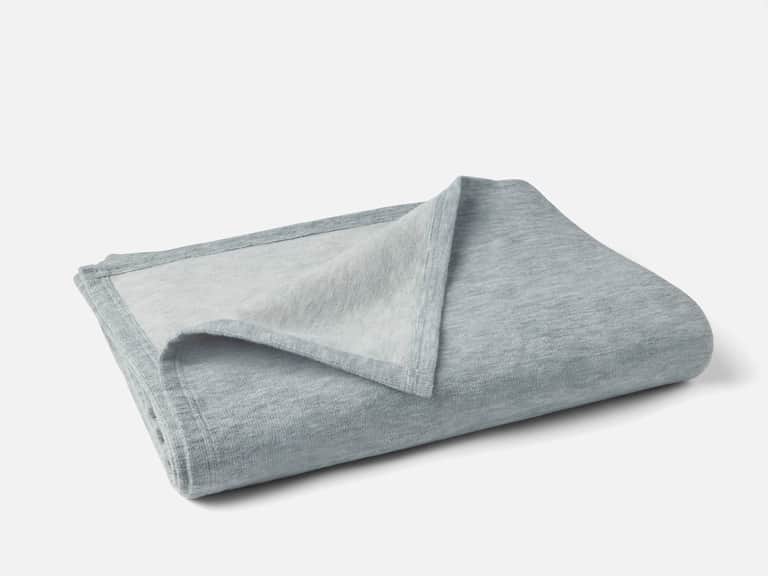
Consider three kinds of layer found in the wider bedding landscape. A wool throw offers warmth and a natural, tactile surface; a cotton blanket may be breathable and straightforward to care for; a recycled-cotton blanket can combine recovered material with new organic cotton. Each answers a different set of needs, and each carries costs associated with its fiber, construction, finishing, and supply chain.
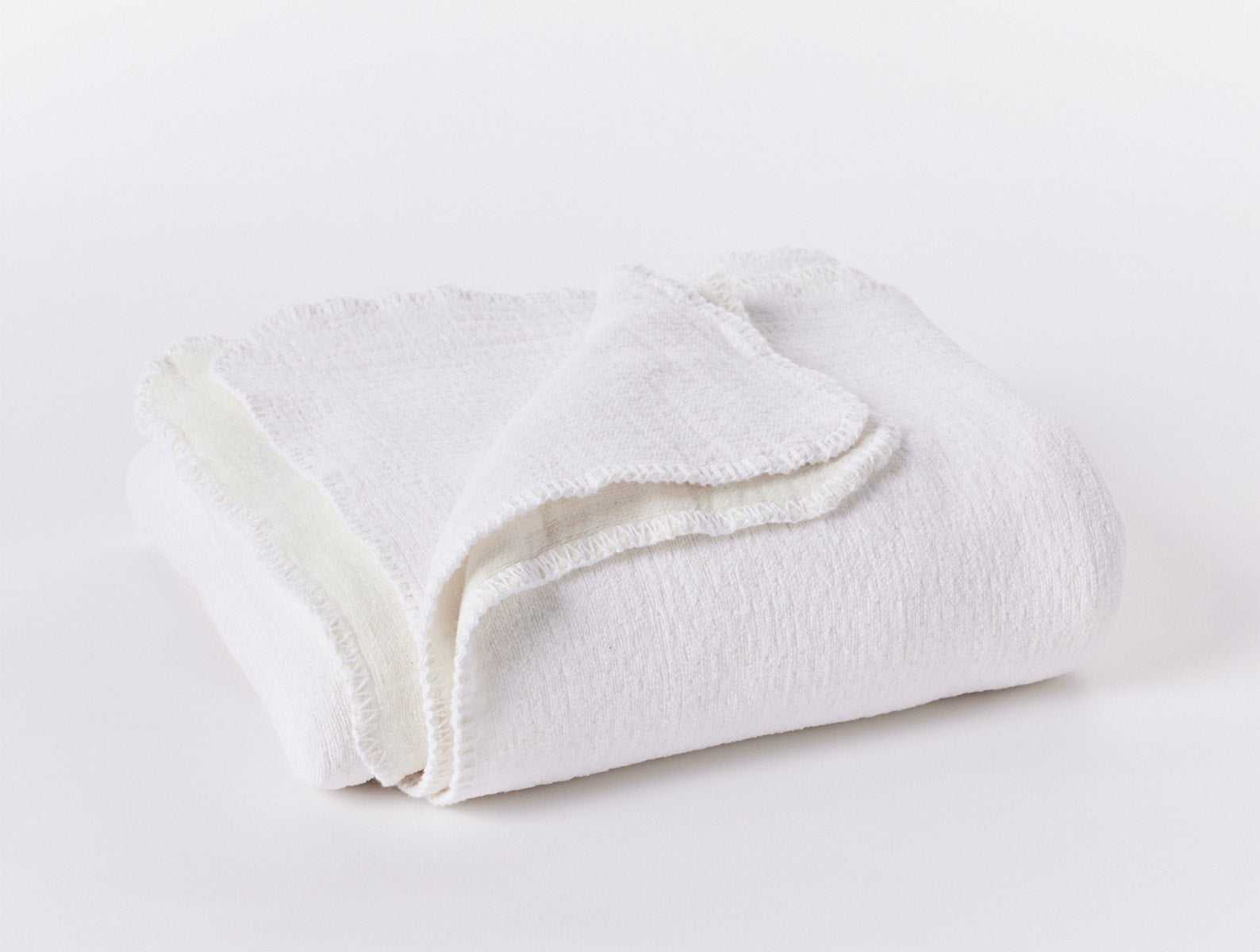
For a concrete illustration, the Full Circle Recycled Cotton Blanket is described as 52 percent recycled cotton and 48 percent organic cotton, woven in Germany and finished with brushing. Its product information notes natural color variations from the recycled yarn and a design intended for regular use. Those details help explain its character and practical purpose; they do not make it directly comparable to a pure cashmere blanket, which uses a different fiber and may require different care.
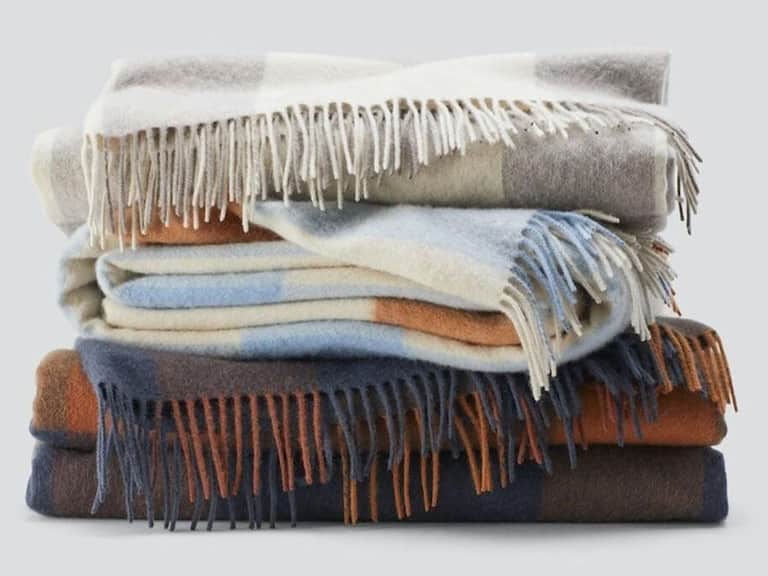
Likewise, the Bold Plaid Throw is described as 100 percent wool, with a substantial feel and a plaid pattern. The fiber and design tell part of the story, but they do not specify every variable—such as wool grade, yarn preparation, or the precise construction. That is not unusual. Product descriptions often provide enough information to guide a broad comparison, while leaving technical details unstated.
These examples show why a price comparison should begin by defining the purpose. Is the layer intended for daily use, seasonal warmth, decorative color, or a particular tactile quality? Does it need to fit a bed, a chair, or a child’s room? Will frequent washing be necessary? Once the use is clear, differences in fiber and construction become easier to assess. A premium price may be reasonable for one purpose and irrelevant to another.
A practical checklist for reading a listing
When a blanket’s price seems difficult to interpret, pause over the details that can actually be checked. The following questions bring the comparison back to the textile itself:
- What is the exact composition? Look for percentages, especially in blends, rather than relying on a prominent fiber name.
- What is known about the fiber? Grade, staple length, fineness, and traceability can add useful context when they are disclosed.
- How is the fabric constructed? Weave, knit, quilting, density, and weight affect drape, warmth, and everyday performance.
- What finishing details are specified? Brushing, washing, dyeing, hems, bindings, and fringe can shape both appearance and maintenance.
- Where did each stage take place? Fiber origin and manufacturing origin are not necessarily the same.
- What care does the maker recommend? A costly textile that needs specialist care may carry additional lifetime expense.
- Are environmental or ethical claims verifiable? Check the meaning and scope of any certification or sourcing statement.
- Does the piece suit its intended use? A beautiful fiber is not useful if the weight, size, or care routine does not fit the household.
When important information is missing, that absence is worth noting. It does not prove poor quality; it simply limits how confidently one can explain the price. A thoughtful comparison distinguishes documented facts from assumptions and gives uncertainty its proper place.
Value is a relationship, not a number
Luxury fiber bedding costs what it does for several reasons at once. Fiber grade and preparation shape the yarn. Construction determines how the material becomes a fabric. Finishing gives it a surface and an edge. Origin and labor contribute to production cost, while branding, distribution, and service influence the final retail price. Care requirements determine what the textile will ask of its owner after it comes home.
No single factor is a reliable shortcut. A prestigious name does not guarantee that a particular blanket is the right choice; a natural fiber label does not reveal the grade; a high price does not establish ethical sourcing; and a lower price does not, on its own, mean a textile will wear poorly. The useful evidence is cumulative: precise composition, credible construction details, transparent origin, sound finishing, and care instructions that make sense for the item.
Approached this way, a cashmere blanket price becomes less mysterious, though not necessarily simple. The question is not merely whether one piece costs more than another. It is what the price includes, which qualities matter to the person using it, and whether those qualities justify the cost over time. That is a quieter standard than luxury marketing prefers, and a more dependable one.