Textile Guide · Bedding Fibers
Cashmere and Merino: How Their Warmth Differs in Home Textiles
Cashmere and merino come from related animals, but they make different kinds of comfort. One is prized for a fine, soft hand and graceful drape; the other often earns its place in bedding through breathable warmth, resilience, and the structure of wool itself. In a throw or a comforter, the fiber matters. So do the weave, the fill, and the way the textile is meant to be used.
Published October 28, 2026
There is a particular domestic pleasure in reaching for a blanket without thinking about it. It rests over the arm of a chair, folds at the end of a bed, or waits in the corner of a sofa for the hour when the room cools and the book becomes more interesting. A good one does not announce its virtues. It simply makes the evening feel better arranged.
When the subject turns to luxury bedding, cashmere and merino wool are often discussed as though they were rival answers to the same question: Which is warmer? But warmth is not a single quality, and a cashmere throw and a merino wool comforter are not necessarily doing the same job. A throw is commonly woven or knitted as a self-contained layer, meant to be draped, carried, and felt directly against the skin. A comforter is a larger bedding layer whose warmth depends on its fill, shell, quilting, and coverage as much as on the fiber inside it.
That distinction is useful before the materials are compared. Fibers have characteristic qualities, but construction gives those qualities their working form. The lightness of a fine wool does not tell you how warm a particular blanket will feel; neither does a fiber name, by itself, explain whether a textile will hold its shape, breathe comfortably, or ask for careful cleaning. To understand warmth at home, it helps to look at the entire object.
Two fibers, two kinds of softness
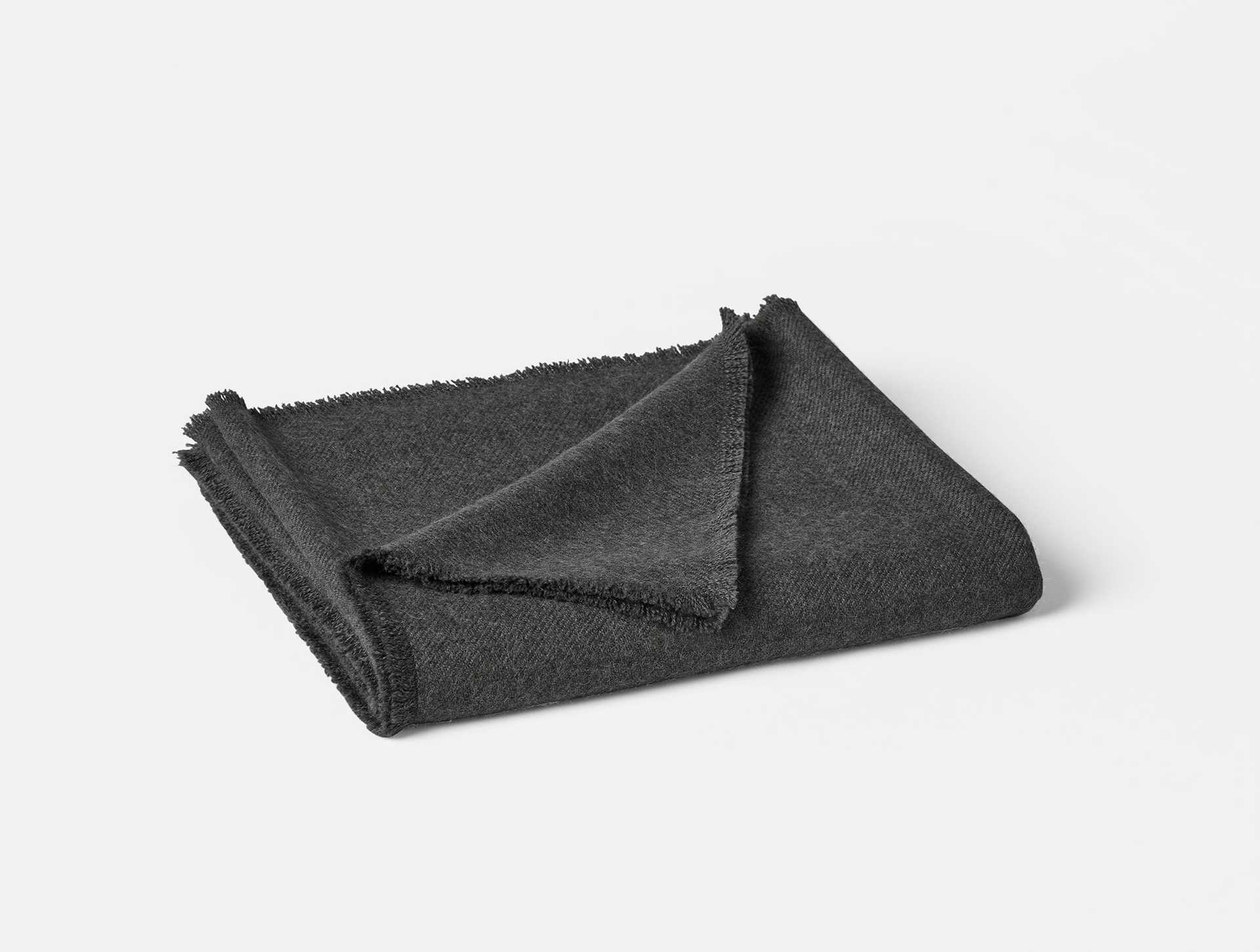
Cashmere is the fine undercoat fiber of cashmere goats. Its reputation rests in part on fineness: individual fibers are slender, and a well-made cashmere textile can feel exceptionally soft and light. The word has become shorthand for a certain kind of luxury, but the useful point is tactile rather than decorative. Cashmere is often selected for the way it feels close to the body and for the fluid, supple drape it can give a woven or knitted throw.
Merino wool comes from merino sheep. Fine merino can also feel soft against the skin, though wool’s familiar qualities—spring, resilience, and an ability to take and release moisture—make it useful across a wide range of textiles. In bedding, merino may be used as a filling inside a comforter, where it is held in place by quilting and a fabric shell. There, the fiber is less a surface flourish than part of a system designed to provide an even layer of insulation.
It is tempting to arrange these materials on a simple scale, with cashmere at the soft end and merino at the practical end. That would be too neat. Both fibers vary in fineness, processing, yarn, and construction. A carefully made merino fabric can be wonderfully soft; a cashmere blend may behave differently from a textile made of cashmere alone. The label gives a starting point, not a complete prediction of how a blanket will feel in a particular room.
Warmth is made, not merely named
Warmth in a textile has a lot to do with the still air its structure can hold near the body. Fiber type contributes to the result, but so do loft, thickness, density, and the gaps created by a weave or knit. A lofty filling can trap air differently from a flat, tightly woven surface. A thick throw may feel weighty and reassuring on the sofa, while a lighter textile can be comfortable when the room is already warm or when it is layered over other bedding.
For this reason, “cashmere is warmer” or “merino is warmer” is usually an incomplete answer. A cashmere throw can offer appealing warmth for reading or resting, particularly when its fabric has enough substance to make a useful layer. A merino comforter can distribute warmth across a bed through its fill and quilted construction. These are different forms of insulation, with different areas of coverage and different relationships to the sleeper.
Weight is another clue, although it needs context. A heavier fabric may feel more substantial, but heft is not identical to warmth. A dense textile may drape firmly; a lofty textile may insulate without feeling as heavy. Fiber blends, yarn thickness, and the pattern of the weave all affect the hand. A herringbone surface, for instance, can add visible texture and a particular fall, while a smooth weave may lie in a more restrained line.
In a bedding ensemble, layers work together. A comforter does not need to do all the work alone: sheets, blankets, room temperature, and personal preference influence the experience. A throw, by contrast, is often added or removed according to the moment. The same textile can be a decorative fold across a bed in the afternoon and a useful layer over the shoulders after dinner. The small freedom to move it around is part of its appeal.
The throw: a tactile layer with a life of its own
A cashmere wool throw blanket—or a throw made entirely of cashmere—occupies an unusual position in the home. It is both a functional layer and a visible object. Draped over a sofa, it contributes texture and color; wrapped around a person, it becomes a personal source of warmth. Its dimensions, finish, and drape matter because it is handled often and seen from several angles.
The construction shapes that experience. Knitted throws can have stretch and a softer, more relaxed fall. Woven throws may offer a clearer pattern, a more defined edge, or a flatter surface. Fringe, binding, and hem stitching are not merely finishing details: they affect how the edges wear and how the piece sits when folded. A supple fabric may cascade over the arm of a chair; a firmer one may keep a crisp fold.
Cashmere’s fine hand is a natural fit for a throw meant to feel gentle against the skin. Yet softness alone does not determine whether a textile is right for everyday use. Think about where it will live, how often it will be handled, whether it is likely to encounter pets or spills, and what the care label permits. A cherished textile may last a long time when treated attentively, but “luxury” is not a substitute for understanding its maintenance.
Fiber blends complicate the picture in productive ways. A blend can change the price, durability, texture, and care needs of a throw. The proportion of each fiber matters, as does the way the yarns are spun and woven. A product description that uses a phrase such as “cashmere-soft” does not necessarily mean that cashmere is present; read the fiber composition rather than relying on a tactile comparison in the name.
The comforter: warmth distributed across the bed
A merino wool comforter brings wool into a different role. Instead of being the visible surface of a throw, wool may form the insulating fill within a cotton shell. Quilting divides the comforter into sections, helping the fill remain distributed rather than slipping into one corner. The shell protects the filling and is the part most directly in contact with other bedding. The complete object works through the interaction of all three: wool, shell, and construction.
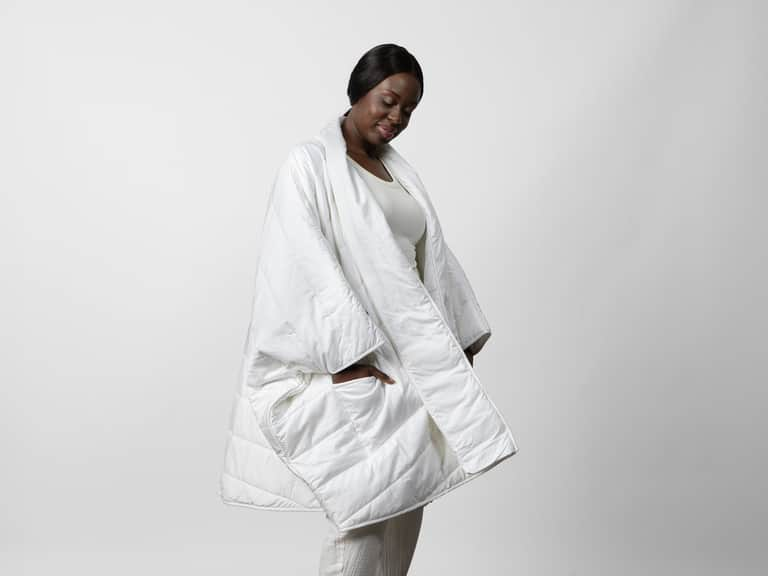
Sleep and Beyond’s myMerino Wool Comforter Light is a useful example of this approach. Its stated construction includes superfine merino wool fill and an organic cotton sateen shell, with quilting intended to keep the batting from shifting. The light version is described as a lighter-weight option for three-season use. Rather than treating wool as a thick surface blanket, the design uses it as an insulating layer within a bed-size format.
That example also illustrates why the word “light” needs to be read in context. It describes the comforter’s relative weight or warmth category, not a promise that every sleeper will experience it identically. Bedroom temperature, bedding layers, the sleeper’s preferences, and local climate all matter. A lighter comforter may suit someone who dislikes heavy covers or wants a layer for milder seasons. Someone who sleeps in a cold room may prefer a different warmth level or an additional blanket.
Wool’s ability to take up moisture without immediately feeling clammy is often cited as one of its useful characteristics in bedding. In practice, the experience depends on the complete product and the conditions in which it is used. A breathable cover and appropriate layering can help a bed feel more comfortable, but no fiber can compensate for every room or sleep preference. The practical question is not whether wool is universally ideal; it is whether the weight, construction, and care requirements suit the person using it.
Drape, loft, and the shape of comfort
Drape is the way a textile falls under its own weight. It is immediately apparent in a throw: the fabric pools, folds, and responds to a hand. Cashmere’s fine fibers can contribute to a soft, fluid drape, though the finished effect depends on the yarn and weave. A woven throw with structure may hold a more deliberate shape; a looser knit may feel relaxed and yielding.
Loft, by contrast, describes the thickness or spring of a textile. It matters particularly in comforters, where the fill creates volume between the sleeper and the room. Quilting influences how that volume is divided. A comforter with well-distributed fill can provide more even coverage than one whose filling has shifted. This is why construction details—fill weight, quilting pattern, shell fabric—are worth considering alongside the name of the fiber.
At home, the distinctions can be felt in ordinary gestures. A throw is lifted and wrapped around the shoulders, then folded back over a chair. A comforter is spread over the bed and remains there, usually beneath or around the sleeper for hours. One is mobile and close at hand; the other is a broad, structured layer. It is not surprising that the same fiber can feel different in each setting.
Care begins with the label
Cashmere and wool are natural animal fibers, but that does not mean every cashmere or wool textile has the same care instructions. Some pieces may require dry cleaning; others may be suitable for careful hand washing or a specific machine cycle. A comforter with wool fill may have a washable shell but require more cautious treatment as a whole. Always follow the manufacturer’s instructions for the particular item rather than applying a general rule based on the fiber name.
Between cleanings, simple habits can reduce unnecessary wear. Air a textile when appropriate, avoid storing it while damp, and protect it from prolonged exposure to direct sunlight if fading is a concern. For seasonal storage, make sure the piece is clean and fully dry, then keep it in a breathable, protected space. Natural fibers can attract pests, so storage conditions matter; follow product-specific guidance, especially for wool bedding.
Spot treatment also calls for restraint. Rubbing a mark vigorously can distort the surface or spread the stain. Blotting gently and consulting the care label is generally safer than improvising with a strong detergent. If professional cleaning is recommended, a local cleaner can advise whether the textile’s construction and finish are suited to the process. The goal is not to make care mysterious, but to recognize that fibers, dyes, and finishing treatments differ.
Comforters benefit from protective layers as well. The maker of the myMerino Light comforter recommends using a removable duvet cover to help protect the comforter and reduce the need for cleaning. That is a practical reminder: a cover is not just a decorative choice but a layer that can absorb routine contact and simplify upkeep. For specific cleaning, spot treatment, or airing recommendations, consult the product’s instructions.
How to choose between them
Begin with the intended use rather than the prestige of the fiber. If you want a compact, visible layer for a sofa, reading chair, or the foot of a bed, a throw may be the more relevant object. If you want insulation spread across a bed, examine comforters and their fill, dimensions, shell fabric, and warmth level. The question “cashmere or merino?” may become easier once the question “what should this textile do?” has been answered.
- For a close, soft hand: Look at cashmere throws and at the stated fiber composition, yarn, and construction. Touch can be a useful guide, but read the label as well.
- For a bed-wide insulating layer: Compare merino wool comforters by fill weight, shell, quilting, and intended season of use.
- For flexible layering: Consider whether a throw will be moved between rooms or used over existing bedding, and whether its weight and dimensions suit that routine.
- For straightforward maintenance: Check care instructions before choosing. Washability, dry-cleaning recommendations, and storage needs vary by textile.
- For a lasting purchase: Consider construction and repairable finishing, not just the fiber name. Durable edges and an appropriate weave can matter in daily use.
It can also help to think about warmth as a relationship between the textile and its setting. A lightweight comforter in a heated bedroom may be enough; in a cooler room, it may need a companion layer. A fine throw can be a pleasant addition on a mild evening, while a denser weave or heavier blanket may suit a draftier room. There is no universal warmth chart that replaces the small experiment of living with a textile through changing weather.
The pleasure of knowing what is under the hand
There is something quietly satisfying about recognizing why one blanket falls in a particular way and another holds its shape. The details are not abstractions once they are connected to use: a fiber, a weave, a quilted fill, a stitched edge. They explain why a throw is easy to draw around the shoulders, why a comforter spreads warmth across a bed, and why one item belongs in a regular laundry routine while another asks for more careful handling.
Cashmere and merino are not simply competing grades of softness. Cashmere’s fine hand makes it especially appealing in throws where touch and drape are prominent. Merino’s role in bedding often takes advantage of wool’s resilience and its use as a breathable filling. Neither material guarantees a particular level of comfort on its own. The finished textile is the result of fiber, construction, weight, and care working together.
So the practical comparison is less a contest than a matter of placement. Choose a cashmere throw when you want a soft, tactile layer that can move through the rooms of the home. Consider a merino comforter when you want a structured, bed-wide layer and the stated fill and weight fit your sleep environment. Read the labels, respect the care instructions, and pay attention to the construction. The best warmth is not necessarily the heaviest or the most expensive. It is the kind that makes the room—and the evening—feel right.